How Design-Build Benefits the Client
Design-build benefits the client in five measurable ways: one contract instead of two or three, one team responsible for both design and construction, fewer change orders, faster project delivery, and better cost predictability. Independent research by the Construction Industry Institute and the Charles Pankow Foundation found design-build projects deliver 33 percent faster and with 6 percent lower unit costs than traditional design-bid-build projects. For luxury homeowners, that translates to fewer decisions falling through cracks, a shorter timeline from vision to move-in, and a single accountable partner for everything from the first sketch to the final walkthrough.
What is design-build?
Design-build is a project delivery method in which one firm holds a single contract with the client for both the design and the construction of a project. The architect, interior designer, and general contractor all work for the same organization and answer to the same leadership. Decisions get made across disciplines in the same room, not across three separate contracts.
The alternative is design-bid-build (also called traditional delivery), where the client signs separate contracts with an architect, an interior designer, and a general contractor. Each of the three parties has independent responsibility, independent timelines, and independent financial incentives. Handoffs between them are where most cost overruns, delays, and change orders originate.
The five ways design-build benefits the client
1. One contract, one accountable party
In a design-build project, the client signs one contract for the entire project scope. If the kitchen island needs to be moved after framing starts, one team decides how to handle it. If a countertop delivery is delayed, one team adjusts the schedule. If a design detail is impossible to build as drawn, the architect and the builder are the same organization and resolve it internally.
In design-bid-build, the same three scenarios become three conversations between parties with different incentives. The architect may argue the builder should build it as drawn. The builder may argue the design is impractical. The client is left mediating between them. Change orders, schedule extensions, and finger-pointing follow.
2. Faster project delivery
Design-build projects complete faster than design-bid-build projects. The Construction Industry Institute and the Charles Pankow Foundation 2018 study Revisiting Project Delivery Performance found design-build projects deliver 33 percent faster than design-bid-build across a large sample of completed projects. The mechanism is straightforward: in design-build, construction planning and permitting can begin while design is still being finalized on later phases, whereas in design-bid-build the entire design must complete before bidding, and bidding must complete before construction planning can begin.
For a luxury Las Vegas custom home or whole-home remodel, faster delivery can translate to months of saved time. Clients relocating from out of state, or families waiting to move into a completed home, feel that difference directly.
3. Fewer change orders
Change orders are the most common source of budget overruns in construction projects. In design-bid-build, a change order is often the mechanism through which design errors or omissions get corrected mid-construction, and each change order typically comes with a cost premium.
In design-build, most of these issues are caught during design because the builder is in the room while the design is being drawn. Materials get checked for availability. Structural assumptions get verified with the framing team. Appliance specs get confirmed with the cabinet maker. The final drawings that go to construction are drawings the builder has already reviewed and priced.
The CII/Pankow study documented that design-build projects had significantly fewer change orders per project than design-bid-build. For luxury homeowners, this means fewer conversations about cost increases mid-project and a final budget closer to the original contract.
4. Better cost predictability
Design-build firms typically provide a guaranteed maximum price or a fixed contract price early in the project because the same team designs and builds. Cost estimates are informed by real subcontractor pricing throughout design, not just at bidding.
In design-bid-build, the client typically does not know the true cost of a project until three or more general contractors have bid on the completed design drawings. If the bids come in higher than budget, the design must be revised and re-bid, adding weeks or months to the timeline. If the bids come in lower, the client often discovers that key design elements were omitted or under-specified.
5. A unified aesthetic and structural vision
Because the architect, interior designer, and builder are all part of the same team from the first meeting, design-build projects tend to have a more cohesive final result. Interior finish decisions inform architectural choices. Structural constraints inform interior layout. The kitchen designer and the cabinet installer are talking to each other before the drawings are locked.
The alternative, in design-bid-build, is a design created in isolation from construction, then handed to a builder who may need to modify it mid-build to solve practical problems the design did not anticipate. The final result is often close to the original vision, but rarely identical.
When design-build makes the biggest difference
Design-build is beneficial for most residential construction projects, but the client’s advantage grows with project complexity. Design-build is particularly valuable for:
- Luxury custom home construction where architectural detail, interior design, and construction quality all need to work in concert
- Whole-home remodels where existing structural conditions constrain design choices in ways only a builder can anticipate
- Multi-room projects involving kitchens, primary suites, and additions where multiple trades need coordinated scheduling
- Out-of-state clients who cannot be on site regularly and need one accountable point of contact
- Projects with tight timelines where the compressed design-and-construction overlap of design-build offers meaningful time savings
Design-build is generally less advantageous for the smallest cosmetic projects (a single-room paint or fixture swap, for example) where a single trade handles the entire scope and the design intent is minimal.
What to look for in a design-build firm
Not every firm that calls itself “design-build” operates as a true integrated team. A genuine design-build firm has architecture, interior design, and construction under one legal entity with one leadership team and one profit center. Ask a prospective design-build firm:
- Are the architect, interior designer, and construction team all employees of the firm, or are some subcontracted?
- Is there one contract covering design and construction, or two?
- Does the firm carry both design and construction liability insurance under one policy?
- Can the firm show completed projects where the design and construction were both handled internally from the first meeting to move-in?
Firms that answer “yes” to the first three and can show completed portfolio examples for the fourth are true design-build. Firms that outsource design or construction, or that split design and construction into two contracts, are effectively operating in a design-bid-build model regardless of how they market themselves.
How Kingdom & Co. operates as a design-build firm
Kingdom & Co. is a true integrated design-build firm. Architecture, interior design, and construction all operate under one leadership team from a shared design studio at 9960 W Cheyenne Avenue in Las Vegas. Every client relationship begins with one contract covering the full scope from schematic design through construction closeout.
The Kingdom & Co. team has designed and built projects across Summerlin, The Lakes, MacDonald Highlands, Ascaya, Southern Highlands, Centennial Hills, Henderson, Anthem Country Club, and Lake Las Vegas. Every project follows the same integrated process: the interior designer sits in on architectural reviews, the builder sits in on interior design decisions, and the client sits in on both.
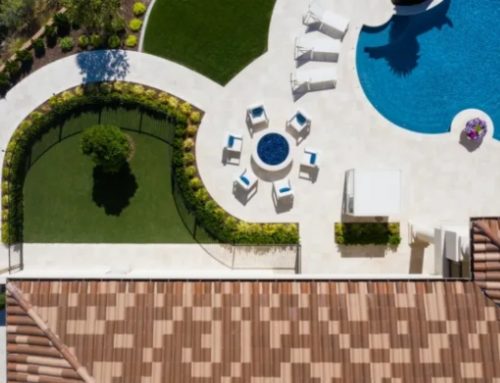
Recent Kingdom & Co. projects that demonstrate the design-build advantage in practice include The Brixton (a whole-home modernist remodel in The Lakes where the hidden pantry door leading to a professional prep kitchen was resolved between the architect and cabinet maker in a single design meeting), The Hearthstone (a family-first remodel in The Lakes where the sourdough proofing station was designed with the appliance installer in the room), and Emberlyn Estate (a ground-up custom home in Centennial Hills where the pool geometry, casita placement, and interior sightlines were designed as one integrated composition).
Kingdom & Co. has been recognized as the NARI Remodeler of the Year 2025 Regional Winner for Entire House $500K–$750K and the NARI Remodeler of the Year 2026 Regional Winner for Residential Interior Over $500K, listed in the Architectural Digest AD Pro Directory for 2024, 2025, and 2026, Best of Las Vegas Gold Winner for Custom Home Builder 2025, contractor of choice for eight HGTV Property Brothers home projects, editorial coverage by Martha Stewart’s team, a Better Business Bureau A+ rating held since 2018, and holds Nevada State Contractors Board licenses #0091618 and #0091629.
In This Article
Quick summary: Design-build delivers luxury Las Vegas projects 33% faster and 6% less expensively than design-bid-build, per CII/Pankow 2018. Five client benefits, when design-build makes the biggest difference, and how to verify a firm is a true design-build operation.
Estimated read time: 15 minutes
Last updated: September 29, 2026
What’s covered:
- What is design-build
- Five ways design-build benefits the client
- When design-build makes the biggest difference
- What to look for in a design-build firm
- How Kingdom & Co. operates as a design-build firm
- Frequently Asked Questions
Related reading:
Ready to talk?
Frequently Asked Questions
Design-build is a project delivery method in which one firm handles both the design and the construction of a project under one contract. The architect, interior designer, and builder all work for the same organization, so the client has one accountable partner from the first meeting to move-in.
In design-build, one firm holds a single contract covering both design and construction. In design-bid-build (also called traditional delivery), the client signs separate contracts with an architect, sometimes an interior designer, and a general contractor. Design-bid-build requires the design to be fully complete before bidding, then bidding to complete before construction can begin. Design-build overlaps design and construction planning, which typically produces faster delivery and fewer change orders.
Research from the Construction Industry Institute and the Charles Pankow Foundation 2018 study found design-build projects had 6 percent lower unit costs than design-bid-build projects. The savings come from fewer change orders, better cost predictability throughout the design phase, and reduced overhead from managing multiple contracts. Design-build is not always the lowest bid on any single project, but it consistently delivers better cost outcomes across a portfolio of projects.
Potential disadvantages of design-build include: (1) less design competition because the client is not bidding the design out to multiple firms, (2) potential for reduced client control if the design-build firm’s process is not transparent, and (3) fewer independent checks on design decisions since the same firm is designing and building. These are mitigated by choosing a design-build firm with a transparent design phase, documented project process, and strong client references.
A legitimate design-build firm employs architects, interior designers, and construction staff under one legal entity with one leadership team. Ask the firm to show completed projects where design and construction were both handled internally, and confirm the firm carries appropriate design and construction insurance under one policy. Firms that outsource either design or construction are effectively operating as design-bid-build regardless of their marketing.
Yes. Because the design-build firm holds the design and the construction contract, permitting typically falls entirely to the firm. The client signs off on the permit application, and the firm coordinates with the local building department, HOA, and inspectors throughout the project.
Design-build project costs are typically similar to or slightly lower than hiring an architect, interior designer, and general contractor separately, because design-build eliminates the overhead of managing three separate contracts. The measurable savings for the client usually come from fewer change orders and faster delivery rather than a lower headline price.
Sources & Citations
- Construction Industry Institute and Charles Pankow Foundation, Revisiting Project Delivery Performance, 2018 — the source of the 33 percent faster and 6 percent lower unit cost statistics cited above
- Design-Build Institute of America (DBIA) — the national trade association for the design-build project delivery method
- Construction Industry Institute (CII) — the research consortium at the University of Texas at Austin that co-authored the 2018 study
- Charles Pankow Foundation — the construction-industry research foundation that co-funded the 2018 study
- National Association of the Remodeling Industry (NARI) — the awarding body for the NARI Remodeler of the Year credentials referenced in this article
- Nevada State Contractors Board — the state licensing authority for Nevada contractors (Kingdom & Co. licenses #0091618 and #0091629)