Why Las Vegas Families Are Building Casitas: The Multigenerational Housing Trend Behind the Boom
More Las Vegas valley families are building casitas than at any point in the last decade. The reasons sit at the intersection of national demographics and Nevada state law. According to the Harvard Joint Center for Housing Studies 2026 State of the Nation’s Housing report, the United States added 17 million adults age 65 and over between 2015 and 2025, bringing the total to 65 million. The Census Bureau projects that number will reach 71 million by 2030. At the same time, the homeownership rate for adults under 35 has dropped to 37 percent in 2025 (down from 39 percent in 2022), with Harvard reporting that many young adults are ‘doubling up or living with family’ because they cannot afford to form their own households.
Aging parents need housing. Adult children cannot afford to leave. The same families are increasingly looking at the same answer: a casita on the family property. Nevada has now made that path easier with Assembly Bill 396, which took effect July 1, 2026 and requires every city and county in the state to allow accessory dwelling units (the legal term for what most families call a casita, in-law suite, or granny flat) on residential lots. Kingdom & Co. has been building these structures across the Las Vegas valley for years. Here is the macro picture behind the trend, what AB 396 changes locally, and what a multigenerational casita actually looks like when it gets built right.
The Aging-Parent Reality Driving Casita Demand
The 17-million-person increase in adults age 65 and over from 2015 to 2025 is not a temporary spike. It is the front edge of a demographic shift that will define US housing demand for the next 20 years. The Harvard JCHS 2026 report projects that adults age 65 and over will represent 21 percent of the population by 2030. Of those 71 million older adults, 19 million will be age 80 and over.
For luxury Las Vegas valley homeowners, this demographic shift shows up at the kitchen counter as a specific conversation: an aging parent’s care needs are increasing, the parent does not want to move into a care facility, the family does not want to be a 45-minute drive away, and the cost of a care facility for a luxury client easily exceeds $100,000 a year. A casita on the family property changes that math. The parent has independent quarters with their own kitchen, bathroom, bedroom, and living space. The family is across the courtyard, not across the valley. The cost of building the casita is a one-time capital decision, not an ongoing operating expense.
The remodeling industry has already noticed. According to the National Association of Home Builders, more than half of all professional remodelers were involved in home modifications to support aging in place in 2024 (cited in the Harvard JCHS 2026 report). Casita construction is the natural extension of that trend. Aging-in-place modifications inside the existing home work for some scenarios. A purpose-built casita with full accessibility features works for the rest.
Adult Children Returning Home (Or Not Leaving)
The other half of the multigenerational story is at the opposite end of the age range. The Harvard JCHS 2026 report tracks a steady decline in young adult homeownership: 37 percent of households under age 35 were homeowners in 2025, down from 39 percent in 2022. The decline is driven by interest rates, home prices, student debt, and a labor market that has weakened over the past two years.
The Harvard report is direct about what young adults are doing instead: ‘Many young adults cannot afford to form new households, instead doubling up or living with family.’ In Las Vegas valley terms, that means adult children in their late 20s and 30s are staying in their parents’ homes longer, returning after graduate school, working remotely from family lots, or moving back during life transitions. The pattern is consistent across the country, but it shows up sharply in a market like ours where housing costs have outpaced wage growth.
A casita answers the same question for adult children that it answers for aging parents: how do you live together while still living independently? The independence piece matters. A 30-year-old returning home wants the privacy of their own entrance, kitchen, and living space. The family wants their adult child close enough to be part of holidays and family routines, far enough to have their own life. A casita splits the difference better than a converted bedroom ever could.
Nevada Just Made Casitas Easier to Build
National demographic pressure on housing has been building for years. Until 2025, Nevada state law had not caught up. Many local jurisdictions blocked accessory dwelling units, required oversized minimum lot sizes, or prohibited casitas from including separate kitchens. Nevada Assembly Bill 396, authored by Assembly member Shea Backus and passed during the 2025 Nevada Legislative Session, changes that. AB 396 requires every Nevada city and county to update their codes by July 1, 2026 to allow accessory dwelling units on residential lots.
Backus framed the law’s purpose during the 2025 session: ‘Nevada, like much of the country, is experiencing an affordability crisis driven by a shortage of available housing. Home ownership and rental prices have skyrocketed, putting financial strains on families, young professionals, and retirees.’ AB 396 is the state’s response. Allowing homeowners to add casitas on their own lots produces more housing faster than waiting for new developments to break ground.
Nevada is part of a broader pattern. The Harvard JCHS 2026 report identifies Arkansas and Iowa as states that adopted similar statewide ADU mandates in 2025. Seattle introduced pre-approved ADU plans. Multiple other states (Montana, Rhode Island, Tennessee, Maine, Maryland) passed laws to increase predictability and clarity in land-use approval. Arizona passed its version in 2024. The regulatory environment is opening up around casitas, and Nevada just joined the front of the wave.
For Las Vegas valley homeowners, AB 396 means the legal path to a casita is clearer than it has ever been. We covered the jurisdiction-by-jurisdiction details in our recent post on AB 396, including the City of Las Vegas June 2026 ordinance, the City of Henderson 1,200 square foot maximum for detached ADUs, the Clark County March 5, 2026 code changes, and North Las Vegas’s existing compliance.
What a Kingdom & Co. Multigenerational Casita Actually Looks Like
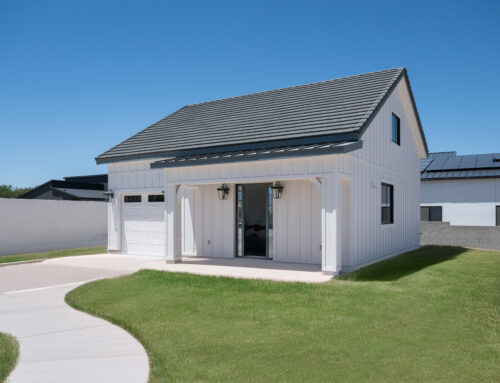
Most multigenerational casitas Kingdom & Co. designs and builds fall into one of three configurations, each tied to the specific family situation.
Detached casita with separate entrance
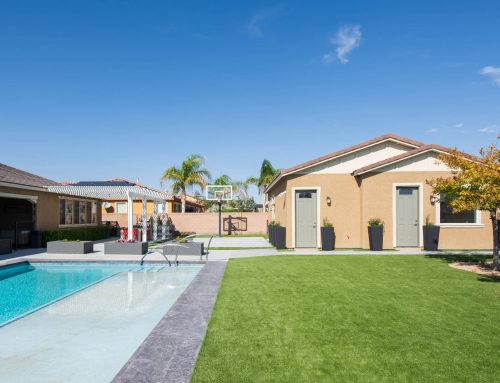
Standalone structure on the property of the primary residence, typically 500 to 1,200 square feet. Has its own entrance, kitchen (full or kitchenette), bathroom, bedroom, and living area. Connected to the primary residence by a walkway, courtyard, or breezeway rather than a shared wall. Best fit for: aging parents who want maximum independence, adult children who need privacy, or families where the lot supports a fully separated structure. Typical K&C pricing: $150,000 for a 500 square foot version, scaling to $720,000 for a 1,200 square foot Henderson-maximum detached ADU.
Attached casita addition
An addition to the primary residence that has its own entrance, full bathroom, and kitchen (per Nevada AB 396’s definition of an accessory dwelling unit). Connected to the main house through a shared wall or short hallway but functionally independent. Best fit for: families that want closer proximity to an aging parent for daily check-ins, properties with smaller lots that cannot support a fully detached structure, or scenarios where construction cost matters more than maximum separation. Pricing typically runs $300 to $500 per square foot of added space, depending on finish level and complexity.
Second-story casita or in-law suite
Above-garage or above-existing-structure suite with full ADU features (kitchen, bath, bedroom, living area, separate entrance). Best fit for: properties where horizontal expansion is constrained by lot size or HOA, or where a second-story addition preserves more usable yard space. K&C pricing typically runs $400 to $700 per square foot of added space, reflecting the structural and mechanical complexity of building above existing structures.
Pricing sourced from Picasa Homes industry data, 2025
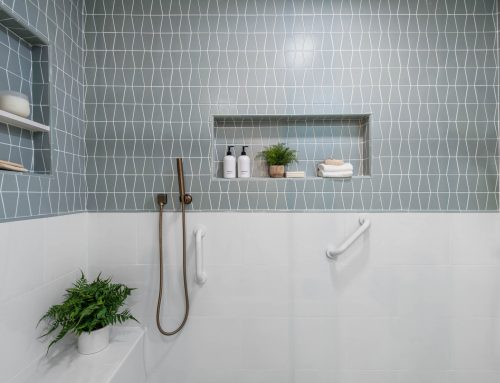
Across all three configurations, the design considerations that make a multigenerational casita work are the same: a separate entrance that the resident can use without going through the main house, sound isolation between the casita and the primary residence, accessibility features for older residents (zero-threshold showers, lever hardware, wider doorways, grab-bar backing built into bathroom walls), and a shared outdoor courtyard or transitional space that lets the family connect without forcing constant contact.
Where Kingdom & Co. Builds Multigenerational Casitas Across the Las Vegas Valley
Casita-friendly lots exist across the valley, but the specific neighborhoods where K&C runs the most projects tend to share a few characteristics: larger lot sizes, established residential character, and HOA architectural review committees that approve well-designed accessory structures. The neighborhoods we work in most often:
- Centennial Hills and Lone Mountain: master-planned area in the northwest valley with larger lots; close to the K&Co. design studio at 9960 W Cheyenne Avenue
- Summerlin (The Ridges, Red Rock Country Club, Summerlin South, Queensridge, The Hills): luxury master-planned villages with the lot size and ARC infrastructure to support casita construction
- Henderson (MacDonald Highlands, Anthem Country Club, Seven Hills): established luxury communities with HOA ARCs experienced in casita and addition review
- Spanish Trail, Spanish Hills, Canyon Gate: established west-valley communities with the lot size to support detached casitas
- Southern Highlands and Rhodes Ranch: south-valley luxury neighborhoods with custom-home and casita activity
- Skye Canyon and Tule Springs: newer northwest valley areas with lot configurations that support second-story additions
Each neighborhood comes with its own HOA architectural review process. AB 396 simplified the state and municipal rules, but the HOA review still applies to any casita built in a master-planned community. K&C handles ARC submission, renderings, material specifications, and the back-and-forth review process as part of every casita project. We have run casitas through every major ARC in the valley.
The Casita Is the Las Vegas Answer to a National Housing Question
The Harvard JCHS 2026 report makes the macro case. Nevada AB 396 makes the local path easier. The Las Vegas valley luxury market has the lot sizes, the HOA infrastructure, and the design-build expertise to actually build these projects well. What remains is the conversation about your specific family situation, your specific lot, and your specific HOA. That is where the work starts.
Frequently Asked Questions
Five design considerations consistently determine whether a multigenerational arrangement succeeds or fails. First, separate entrances so each resident can come and go without going through someone else’s space. Second, sound isolation so daily routines do not collide. Third, accessibility features for older residents (zero-threshold showers, lever hardware, wider doorways, grab-bar backing in bathroom walls). Fourth, a shared outdoor space (courtyard, patio, or breezeway) that lets the family connect on purpose rather than by accident. Fifth, design that respects the resident’s autonomy: a separate kitchen even if it is small, the resident’s own thermostat, their own front door key, their own mail. Kingdom & Co. designs around these considerations on every multigenerational casita project.
The Las Vegas valley has had a higher rate of homes with casitas than most American cities for decades. Several factors drive this. The city’s tourism economy means many families host extended visits from out-of-town relatives, which makes separate guest quarters valuable. Las Vegas’s larger luxury lot sizes (compared to coastal markets at similar price points) make detached casitas physically possible on more properties. Architectural traditions in the region have long included separate quarters as a design feature. With Nevada AB 396 effective July 1, 2026, and the Harvard JCHS 2026 report documenting the national multigenerational trend, the existing Las Vegas preference for casitas is now aligned with both state law and national demographics. Demand is increasing, not decreasing.
Most Las Vegas valley casitas Kingdom & Co. builds fall between 500 and 1,200 square feet. The right size depends on the intended use. A 500 square foot casita with a bedroom, bathroom, and kitchenette works for most aging-parent and adult-child use cases. An 800 square foot casita gives the resident a true one-bedroom apartment with a full kitchen and living area. A 1,200 square foot casita (the maximum allowed for a detached ADU in the City of Henderson) approaches a small home, with room for a bedroom, separate living and dining areas, and a kitchen that supports actual cooking rather than just reheating. Final size is governed by your lot size, your jurisdiction’s code, and your HOA’s architectural review committee.
Casitas reliably add value to a Las Vegas valley property because the local market has a long-established preference for homes with separate quarters (driven by the city’s tourism economy, family visiting patterns, and now the multigenerational and AB 396 trends). Exact valuation depends on the casita’s size, finish level, and integration with the primary residence. A well-built 800 to 1,200 square foot casita on a larger lot can add a six-figure premium to the property at resale, though the specific number varies by neighborhood and finish level. The bigger point: a casita pays back through use during your ownership (rental income is not an angle Kingdom & Co. promotes, but multigenerational living, guest accommodations, and home office use all add real lived value), not just through eventual resale.
For most families, yes. The Harvard Joint Center for Housing Studies 2026 State of the Nation’s Housing report documents a steady rise in multigenerational households driven by both aging parents and adult children who cannot afford to form independent households. The benefits are concrete: shared resources, proximity for caregiving, family cohesion across generations, and significant cost savings compared to alternatives (assisted living for aging parents, separate apartments for adult children). The challenges are also concrete and largely solved by good design: privacy, sound isolation, separate entrances, and considered shared spaces. A well-designed casita answers most of the design challenges directly.