The ROAD Housing Act Is Now Law. Here Is What It Means for Nevada.
What you need to know: The ROAD Housing Act became law July 11, 2026. It restricts institutional investors owning 350+ homes from buying more existing single-family homes (effective January 2027), modernizes FHA Title I renovation loans, creates a $30 million home repair grant pilot, supports pre-approved ADU designs, and streamlines housing approvals. It does not lower interest rates or create new tax credits.
On July 11, 2026, the 21st Century ROAD to Housing Act became federal law, the largest housing legislation the country has seen in over 30 years. ROAD stands for “Renewing Opportunity in the American Dream,” and the bill passed with overwhelming bipartisan support: 358-32 in the House and 85-5 in the Senate. For Nevada homeowners, the ROAD Housing Act Nevada impacts range from better renovation financing to institutional investor restrictions that could free up inventory in the Las Vegas valley.
The bill was sponsored by Sen. Tim Scott (R-SC), Sen. Elizabeth Warren (D-MA), Rep. French Hill (R-AR), and Rep. Maxine Waters (D-CA). President Trump declined to sign it, and it became law automatically after 10 days under Article I, Section 7 of the Constitution.
Most of the national coverage has focused on new construction incentives and restrictions on institutional investors. But for Nevada residents, particularly homeowners and prospective buyers in Las Vegas, Henderson, and the surrounding valley, this law touches several areas that deserve a closer look.
Nevada’s Housing Problem, by the Numbers
Las Vegas hit a $490,000 median home price in June 2026, tying its all-time record. That number is driven primarily by a lack of inventory. According to a 2026 housing summit in Clark County, the Las Vegas metro area needs between 80,000 and 96,000 additional housing units, with 88% of Clark County land federally owned and only 36,000 acres of developable land remaining.
That shortage is not just an inconvenience. It drives up prices, forces bidding wars, limits options for first-time buyers, and makes it harder for existing homeowners to move up, downsize, or relocate within the valley.
The ROAD Housing Act Nevada does not fix this overnight. But it puts several mechanisms in motion that could help over time.
What the ROAD Housing Act Actually Does
The bill spans 12 titles and 57 sections, pulling together provisions from more than 60 individual pieces of legislation. Its four stated goals are to cut red tape, unlock housing supply, lower costs for families, and accomplish all of it without new federal spending.
Here are the provisions most relevant to Nevada:
Institutional Investor Restrictions
Companies that own 350 or more single-family homes are now barred from purchasing additional existing single-family homes. This takes effect 180 days after the law’s enactment, which puts the enforcement date around January 7, 2027.
Las Vegas has been one of the most active markets in the country for institutional single-family investors. Large firms have purchased thousands of homes in the valley over the past several years, converting them to rentals and removing them from the resale market. This provision directly addresses that dynamic.
There are exceptions. Investors can still build new homes specifically for rental (build-to-rent), and they can purchase existing homes if they invest at least 15% of the purchase price into substantial rehabilitation. They are also not required to sell homes they already own.
For individual buyers and homeowners, this is a meaningful shift. Less institutional competition means more inventory stays available for families and individuals looking to purchase.
Faster Approvals for Housing Projects
The ROAD Housing Act Nevada expands categorical exclusions from the National Environmental Policy Act (NEPA) for certain housing projects, particularly infill development and rehabilitation of one- to four-unit residential buildings. It also streamlines environmental reviews for projects receiving federal housing assistance.
For Nevada, where land use and permitting timelines can add months to project schedules, these changes could meaningfully shorten the path from approval to construction for qualifying projects.
Pre-Approved Building Designs for ADUs and Small Housing
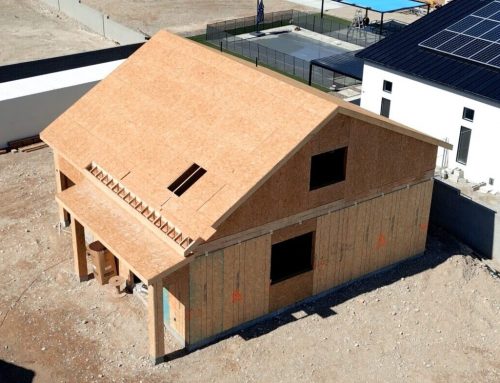
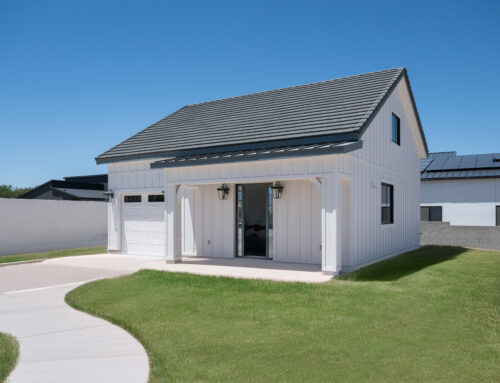
The Accelerating Home Building Act, included within the ROAD Housing Act Nevada, provides federal grants for communities to develop and adopt pre-reviewed building designs for accessory dwelling units (ADUs), duplexes, and townhouses. The idea is to eliminate redundant design review at the local level and allow homeowners and builders to move faster on smaller housing types.
In Clark County and the City of Las Vegas, where ADU regulations have been evolving through legislation like Nevada Assembly Bill 396, this could provide additional support for homeowners looking to add a casita, guest house, or accessory unit to their property.
Better Financing for Home Improvements
The law modernizes FHA Title I property improvement lending, which had been largely untouched for years. Updated lending terms make it easier for homeowners to finance renovations, repairs, and improvements through established federal channels.
For Las Vegas homeowners who have been putting off a kitchen remodel, bathroom renovation, or necessary repairs because of financing challenges, this is a practical change that could make a real difference.
The Whole-Home Repairs Pilot
The ROAD Housing Act Nevada creates a HUD pilot program, funded at $30 million over five years, that channels grants and forgivable loans to homeowners and small landlords for home repairs and modifications. The program is competitive, meaning states and local agencies must apply to participate, and there is no guarantee every state will receive funding.
This is targeted at low- and moderate-income homeowners, but the program’s existence signals a shift in how the federal government views residential repair and renovation. For years, federal housing policy focused almost exclusively on new construction. ROAD Housing Act Nevada acknowledges that maintaining and improving existing housing stock is just as important.
Adaptive Reuse of Commercial Buildings
The RESIDE Act, another provision within the ROAD Housing Act Nevada, funds pilot grants to help local governments convert vacant commercial and industrial buildings into housing. Las Vegas has vacant commercial space in parts of the valley, and this provision creates a new pathway for putting that space to use.
What This Does Not Do
It is worth being clear about what the ROAD Housing Act Nevada does not address:
It does not lower interest rates. Mortgage rates are determined by different forces, and this legislation does not change them.
It does not create new tax credits or housing incentives. The bill explicitly avoids authorizing new federal spending.
It does not override local permitting authority. The law incentivizes cities and counties to reform their own processes, but it does not force them to.
And it does not produce immediate results. Most provisions require federal agencies to write rules, launch pilot programs, and distribute funds before the effects reach local markets. Nevada homeowners and buyers will feel these changes gradually over the next several years, not next month.
What It Means for You
If you are a Nevada homeowner considering a remodel or renovation, the modernized FHA Title I lending terms are worth a conversation with your lender. Better financing options can change the math on projects that may have felt out of reach.
If you are a prospective buyer in the Las Vegas market, the institutional investor restrictions will not produce immediate inventory, but they will slow the pace at which homes are removed from the resale market by large-scale investors. Combined with continued new construction activity, this should contribute to a healthier market over time.
And if you are watching the Las Vegas housing market from any angle, the ROAD Housing Act Nevada is a signal that federal policy is starting to take housing supply seriously, not just in terms of building new homes, but in terms of preserving, improving, and financing the homes that already exist.
Key Takeaways
- Institutional investors owning 350+ homes are barred from buying more existing single-family homes starting January 2027
- FHA Title 1 renovation loans are modernized, making home improvement financing more accessible
- The Whole-Home Repairs pilot provides $30 million in grants for home repairs over five years
- Pre-approved ADU designs will speed up permitting for casitas and additions
- The law does not lower interest rates, create tax credits, or override local permitting

Frequently Asked Questions
Yes. Nevada Assembly Bill 396 expanded homeowner rights to build accessory dwelling units, and both Clark County and the City of Las Vegas have ADU regulations in place. Rules vary by jurisdiction and zoning, so checking your specific property’s zoning is an important first step. The ROAD Act’s Accelerating Home Building Act may further simplify the process by funding pre-approved ADU designs that reduce design review timelines. (FOX5 Vegas)
The ROAD Act does not directly control housing prices or lower interest rates. However, by restricting institutional investors from buying existing homes, streamlining housing production, and supporting ADU construction, it could contribute to increased inventory over time. Las Vegas, which hit a $490,000 median home price in June 2026 and faces a shortage of 80,000 to 96,000 units, stands to benefit from any increase in available housing supply. (8 News Now, FOX5 Vegas)
The ROAD Act prohibits companies that own 350 or more single-family homes from purchasing additional existing single-family homes. This takes effect 180 days after enactment (approximately January 7, 2027). Exceptions exist for new construction built for rental (build-to-rent) and for purchases where the investor spends at least 15% of the purchase price on substantial rehabilitation. Investors are not required to sell homes they already own. (Marketplace)
The ROAD Act addresses housing supply through several mechanisms: restricting institutional investors from purchasing additional existing single-family homes (freeing up inventory for individual buyers), streamlining NEPA environmental reviews to speed up housing construction, funding pre-approved ADU and duplex designs to reduce permitting timelines, and supporting commercial-to-residential building conversions through the RESIDE Act. Clark County currently faces a shortage of 80,000 to 96,000 housing units, and these provisions target supply from multiple angles. (Bipartisan Policy Center, FOX5 Vegas)
For homeowners, the ROAD Act modernizes FHA Title I property improvement loans (making renovation financing more accessible), creates the Whole-Home Repairs pilot program ($30 million in grants and forgivable loans for home repairs), supports pre-approved ADU and duplex designs to speed up permitting, and streamlines NEPA environmental reviews for housing rehabilitation projects. (Bipartisan Policy Center)
The ROAD Act became law on July 11, 2026. The bill passed the House 358-32 and the Senate 85-5. President Trump declined to sign it, and it became law automatically after 10 days under Article I, Section 7 of the Constitution. (NLIHC)
The 21st Century ROAD to Housing Act (H.R. 6644) is the largest bipartisan federal housing legislation in over 30 years. ROAD stands for “Renewing Opportunity in the American Dream.” The law spans 12 titles and 57 sections and incorporates more than 60 individual housing bills. Its stated goals are to cut regulatory red tape, increase housing supply, and lower costs for families without authorizing new federal spending. (Congress.gov)