The ROAD Act Is Law. Here Is What Las Vegas Homeowners and Builders Should Do Now
The 21st Century ROAD to Housing Act became law on July 11, 2026. In Part 1 of this series, we covered what the law does and why it matters for Nevada. In Part 2, we looked at how its provisions affect home remodeling specifically. Now the practical question: what should you actually do about it?
The answer depends on whether you are a homeowner planning improvements to your property or a professional working in the remodeling and construction industry. Both groups have specific steps worth taking now, even before all the federal regulations are finalized.
If You Are a Homeowner
Talk to Your Lender About FHA Title I
The ROAD Act modernizes FHA Title I property improvement loans. These are standalone renovation loans backed by the Federal Housing Administration that do not require you to refinance your mortgage or tap your home equity.
If you have been considering a kitchen remodel, bathroom renovation, or any significant home improvement, ask your lender whether they offer FHA Title I loans and what the updated terms look like as HUD publishes them. Not every lender participates in the Title I program, so you may need to shop around.
This is especially worth exploring if you have a mortgage rate you do not want to lose by refinancing, or if you purchased recently and have not built up enough equity for a HELOC.
Understand What Grants May Become Available
The Whole-Home Repairs pilot program created by the ROAD Act will distribute $30 million over five years in grants and forgivable loans for home repairs. This is a competitive program, meaning Clark County, the City of Las Vegas, or the State of Nevada would need to apply and be selected.
You cannot apply for this funding directly as a homeowner right now. But you can stay informed about whether your local government pursues it. Watch for announcements from Clark County, the Southern Nevada Regional Housing Authority, or the Nevada Housing Division. If the program comes to the Las Vegas area, it could help cover critical repairs like roofing, plumbing, electrical, HVAC, and accessibility modifications.
Consider ADU Planning
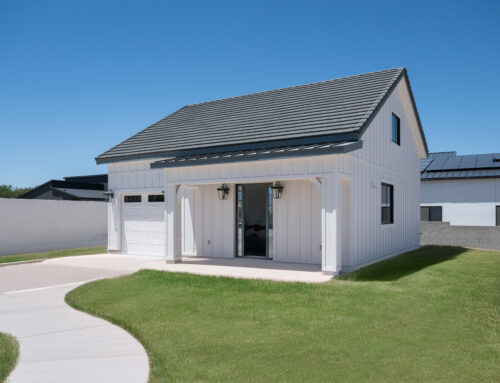
If you have been thinking about adding an accessory dwelling unit to your property, whether for a family member, rental income, or future flexibility, the ROAD Act’s pre-approved design provisions could make that process faster and less expensive down the road.
Start by checking your property’s zoning. Clark County and the City of Las Vegas have different ADU regulations, and Nevada Assembly Bill 396 recently expanded homeowner rights to build casitas, but not every lot qualifies. If your property does qualify, begin thinking about what you would want: a detached casita, an attached addition, a garage conversion. When pre-approved designs become available locally, you will be better positioned to move quickly if you have already done the preliminary thinking.
Do Not Wait for the Law to Start Planning
Federal regulations take time to implement. HUD needs to write rules, launch programs, accept applications, and distribute funds. Most of the ROAD Act’s provisions will roll out over the next one to three years, not the next few months.
That does not mean you should wait to plan your project. If you are considering a remodel, the best time to start the design and planning process is well before you are ready to break ground. Talking to a design-build firm now, understanding your scope, getting a realistic budget, and making design decisions all take time. Learn about how our process works to understand the typical timeline. By the time financing options expand or grants become available, you will be ready to move.
If You Are a Builder or Remodeling Professional
Familiarize Yourself with the FHA Title I Program
Many contractors and remodelers are not familiar with FHA Title I because it has been underutilized for years. That is likely to change. As updated lending terms roll out, more homeowners will ask about Title I loans as a financing option for their projects.
Understanding the basics, including what types of improvements qualify, what documentation is required, and how the disbursement process works, will help you guide clients and close projects that might otherwise stall over financing.
Prepare for the Institutional Investor Restriction
Starting around January 7, 2027, companies owning 350 or more single-family homes will be barred from purchasing additional existing single-family homes. There is a notable exception: they can still buy existing homes if they invest at least 15% of the purchase price into substantial rehabilitation.
This “renovate-to-rent” exception could create a new project pipeline for remodeling firms. Institutional investors who want to continue acquiring properties will need to perform qualifying renovations, and they will need licensed, capable contractors to do the work. Firms that can handle full-home renovations at scale may find a new client category.
At the same time, the overall restriction means more homes should stay in the resale market for individual buyers. This could lead to more homeowner-initiated remodeling projects as families buy and renovate older homes instead of competing with institutional investors for move-in-ready inventory.
Watch for Adaptive Reuse Opportunities
The RESIDE Act provisions within the ROAD Act fund pilot grants for commercial-to-residential building conversions. Las Vegas has vacant commercial space in older retail and office corridors, and converting those properties to housing requires extensive renovation: new kitchens, bathrooms, mechanical systems, insulation, fire separation, and interior buildouts.
For firms with commercial renovation experience or those looking to expand into that space, these projects could represent significant opportunities as local governments apply for and receive conversion grants.
Engage with Local Government on Pre-Approved ADU Designs
The Accelerating Home Building Act provides federal grants for communities to develop pre-approved building designs for ADUs, duplexes, and townhouses. If Clark County or the City of Las Vegas pursues this funding, they will need input from local builders and designers on what designs work for the region’s climate, lot sizes, and building practices.
Getting involved early, whether through NARI, SNHBA, or direct engagement with local planning departments, positions your firm to influence the design standards and to be ready to build from those designs when they are adopted.
Invest in Workforce Development
The ROAD Act includes provisions for workforce training, and the Whole-Home Repairs pilot specifically funds contractor training alongside homeowner grants. The remodeling industry nationwide is dealing with skilled labor shortages, and Las Vegas is no exception.
Firms that invest in training, whether through apprenticeship programs, trade school partnerships, or internal development, will be better positioned to handle the project volume that these new programs could generate. The firms that have the crews to do the work will win the work.
The Bigger Picture
The ROAD Housing Act is not going to transform the Las Vegas housing market overnight. Most of its provisions require federal rulemaking, competitive applications, and gradual rollout. Some provisions may take two or three years to produce tangible local effects.
But the direction is meaningful. Federal policy is shifting toward supporting existing homeowners, not just new construction. It is creating new financing options for renovations. It is funding repair programs. It is making it easier to add housing through ADUs and adaptive reuse. And it is putting limits on the institutional investors that have been competing with families for single-family homes.
For homeowners, the practical takeaway is to start planning now. Talk to your lender. Talk to a design-build firm. Understand your options. The financing and funding landscape is going to improve, and the homeowners who have done their homework will benefit first.
For industry professionals, the takeaway is to pay attention. The firms that understand these programs, that can guide clients through new financing options, and that are ready to build when the demand comes will be the ones that grow.
Frequently Asked Questions
The ROAD Act prohibits companies owning 350 or more single-family homes from buying additional existing homes, effective approximately January 7, 2027. Las Vegas has been one of the most active markets for institutional single-family investors, with large firms purchasing thousands of homes and converting them to rentals. The restriction should keep more homes available for individual buyers, though investors can still build new rental homes and can still purchase existing homes if they spend at least 15% of the purchase price on substantial rehabilitation. (Affordable Housing Finance, Marketplace)
Clark County allows accessory dwelling units on residential properties, and Nevada Assembly Bill 396 recently expanded homeowner rights to build casitas statewide. Specific regulations vary by zoning district, including setback requirements, maximum square footage, parking, and owner-occupancy rules. ADU permit fees in Clark County typically range from $200 to $800 for plan check and $500 to $2,500 for the building permit, with construction costs averaging $150 to $300 per square foot. The ROAD Act’s pre-approved design provisions could further simplify the permitting process. (FOX5 Vegas)
The Las Vegas median home price hit $490,000 in June 2026, tying its all-time record. The metro area faces a shortage of 80,000 to 96,000 housing units. The ROAD Act’s institutional investor restrictions (effective January 2027) could slow the removal of single-family homes from the resale market, and new ADU and adaptive reuse provisions may gradually increase supply. However, the law does not lower interest rates or immediately increase inventory. (8 News Now, FOX5 Vegas)
The ROAD Act created the Whole-Home Repairs pilot program, funded at $30 million over five years, which provides grants and forgivable loans for home repairs. However, this is a competitive program that requires state or local government participation. As of July 2026, Clark County and Nevada have not yet applied. Watch the Nevada Housing Division and Southern Nevada Regional Housing Authority for announcements. Separately, the existing Section 504 Home Repair Program through USDA Rural Development offers loans and grants for very-low-income rural homeowners.
FHA Title I loans are offered through approved lenders, not directly through HUD. Contact your bank or mortgage lender and ask whether they participate in the FHA Title I program. Not all lenders do, so you may need to shop around. You can also search HUD’s lender list at hud.gov. The ROAD Act updated the program’s terms, and specific revised limits will be published by HUD as regulations are implemented.
Start by talking to your lender about FHA Title I property improvement loans, which the ROAD Act has modernized. Check your property’s ADU zoning if you are interested in adding a casita or guest house. Watch for announcements from Clark County or the Nevada Housing Division about the Whole-Home Repairs grant program. And if you are considering a remodel, begin the planning and design process now so you are ready to move when financing options expand. (HUD, Bipartisan Policy Center)