Incorporating European Hardwood into Modern Interiors
Few materials carry the warmth, character, and quiet sophistication of European hardwood. Whether milled from centuries-old French oak forests or sourced from sustainably managed woodlands across central Europe, these species have shaped the interiors of grand estates and contemporary residences alike. Today, they are finding a natural home in modern Las Vegas design, where homeowners want materials that look extraordinary and hold up in the desert climate.
For design-conscious homeowners planning a renovation or new build, European hardwood offers something domestic alternatives often cannot: depth of grain, superior density, and a proven track record in high-end architecture. In this guide, we cover what European hardwood is, how it performs in the Las Vegas environment, and how to integrate it into a cohesive interior design plan.
What Is European Hardwood?
European hardwood refers to timber species native to or predominantly harvested from European forests. Unlike generic “hardwood” labels at big-box retailers, true European hardwood is prized for specific growth characteristics, tighter grain structure, and higher tannin content that responds beautifully to staining, fuming, and natural oil finishes.
French Oak (Quercus Petraea and Quercus Robur)
French oak is the benchmark for premium European hardwood. Grown in managed forests like those certified by the Programme for the Endorsement of Forest Certification (PEFC), these trees mature over 150 to 200 years, producing tight annual growth rings and exceptional density. French oak is the species behind the wide-plank floors seen in Parisian apartments and Provençal estates, now adapted into engineered planks suited for modern installations.
European White Oak (Quercus Robur)
Sharing lineage with French oak, European white oak is harvested across Germany, Austria, and Eastern Europe. It has a Janka hardness rating comparable to or exceeding domestic white oak, with a subtler, more uniform grain. Its higher tyloses density makes it naturally resistant to moisture penetration, a quality that matters in engineered flooring construction.
Italian Walnut (Juglans Regia)
Italian walnut offers rich chocolate-to-espresso tones and swirling grain character that domestic black walnut cannot replicate. It is softer than oak, making it better suited for accent walls, custom millwork, and cabinetry rather than high-traffic flooring. When used thoughtfully, Italian walnut becomes a statement material in a modern interior.

Benefits of European Hardwood for Modern Interiors
Durability That Justifies the Investment
European white oak and French oak rank between 1,350 and 1,500 on the Janka hardness scale, placing them among the most durable flooring-grade hardwoods available. According to the National Wood Flooring Association (NWFA), properly installed hardwood floors can last a century with periodic refinishing. For Las Vegas homeowners investing in a whole-home renovation, that lifespan translates to real long-term value.
Aesthetic Depth That Evolves Over Time
One of the distinguishing features of European hardwood is how it ages. High tannin content means the wood reacts to UV light and natural oxidation, developing a richer patina over years. This living quality is impossible to replicate with synthetic materials and difficult to achieve with lower-tannin domestic species.
Sustainability Credentials
European forestry management is among the most regulated in the world. Species sourced from PEFC-certified forests are harvested under strict replanting and biodiversity requirements. For clients who prioritize environmental responsibility, verified sourcing documentation should be part of any specification conversation.

How European Hardwood Performs in the Las Vegas Desert Climate
Las Vegas presents a specific challenge for wood products: extreme heat, low ambient humidity that often drops below 15 percent outdoors, and aggressive HVAC cycling indoors. Solid hardwood planks can gap, cup, or crown under these conditions. That is why engineered European hardwood has become the preferred format for desert installations.
Acclimation Is Non-Negotiable
The NWFA installation guidelines recommend acclimating hardwood flooring in the installation environment for a minimum of three to five days, with the HVAC system running at normal operating conditions. In Las Vegas, this step is critical. Skipping acclimation is the single most common cause of post-installation failures in desert climates.
Humidity Management Indoors
Maintaining interior relative humidity between 35 and 55 percent protects European hardwood from excessive shrinkage. Whole-home humidification systems integrated into the HVAC design are standard practice in luxury Las Vegas builds. The EPA recommends monitoring indoor humidity levels for both health and material preservation.
Engineered Construction for Dimensional Stability
Engineered European hardwood uses a cross-laminated plywood or HDF core beneath a real hardwood wear layer, typically 4 to 6 millimeters thick. This construction counteracts the expansion and contraction forces that solid planks cannot resist in low-humidity environments. It also allows for installation over radiant heat systems and concrete subfloors, both common in Las Vegas construction.
Design Applications for European Hardwood
European hardwood is far more versatile than its reputation as a flooring material suggests. In a well-planned design-remodel project, it can serve as a unifying thread across multiple surfaces and elements.

Flooring
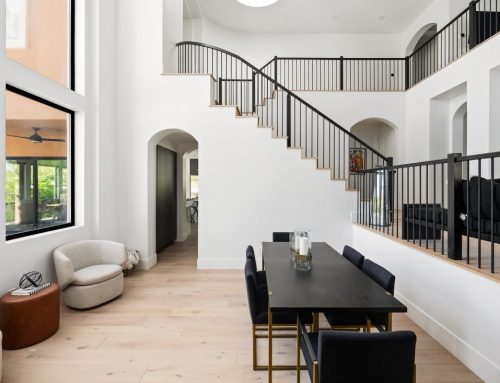
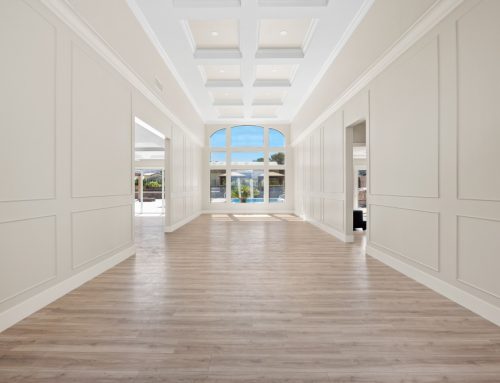
Wide-plank engineered French oak and European white oak floors remain the most popular application. Plank widths of 7 to 10 inches with long lengths create a sense of scale and continuity in open-concept layouts. Finishes range from matte natural oils to wire-brushed and fumed treatments that add texture and depth.
Accent Walls and Ceiling Treatments
Hardwood accent walls bring warmth to living rooms, primary bedrooms, and home offices. When matched to the flooring species, a vertical or horizontal plank accent wall creates visual cohesion without overwhelming the space. Ceiling applications in great rooms and covered outdoor living areas are gaining traction in Las Vegas luxury homes.
Custom Cabinetry and Millwork
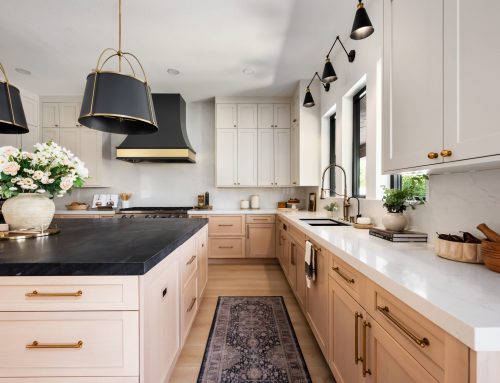
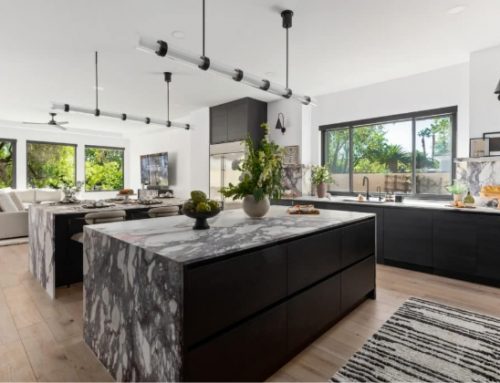
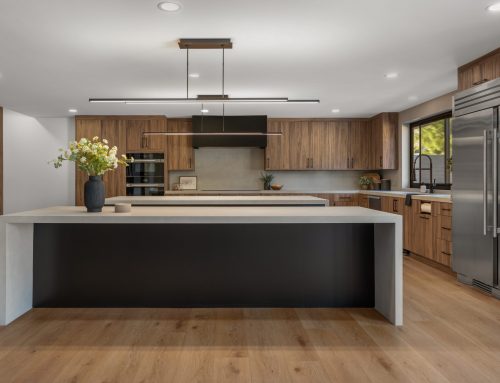
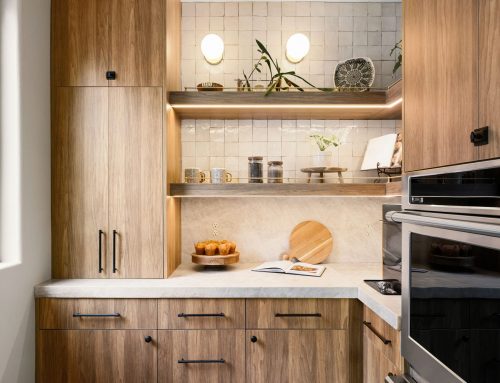
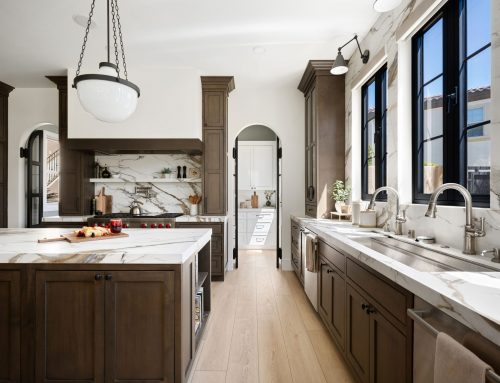
European white oak has become the go-to species for custom kitchen cabinetry in modern interiors, replacing the painted MDF trend that dominated the last decade. Its grain reads beautifully in flat-panel and slab-door configurations, especially with a kitchen design that emphasizes natural materials. Italian walnut millwork, including built-in shelving, fireplace surrounds, and bar cabinetry, adds a layer of richness that paint-grade materials cannot achieve.
Stair Treads, Trim, and Transitional Details
Matching stair treads, baseboards, and door casings to the primary flooring species creates a finished, intentional look throughout the home. These details are easy to overlook but make a meaningful difference in how cohesive a renovation feels when complete.
European Hardwood vs. Domestic Alternatives
Choosing between European and domestic hardwood involves weighing several factors. Here is how they compare across the categories that matter most for modern Las Vegas interiors.
| Factor | European Hardwood | Domestic Hardwood |
| Grain Pattern | Tight, consistent, high tannin | Varied, often more pronounced |
| Janka Hardness | 1,350–1,500 (French/European oak) | 1,290–1,360 (white oak/hickory) |
| Stain Reactivity | Excellent; fuming and reactive stains | Good; standard stain application |
| Desert Suitability | Excellent in engineered format | Good in engineered; solid can struggle |
| Sustainability | PEFC/FSC certified sources common | Varies by supplier |
| Availability | Specialty suppliers; longer lead times | Widely available; shorter lead times |
Neither option is universally “better.” The right choice depends on the specific design vision, performance requirements, and project timeline. A qualified design-build team can help evaluate these trade-offs in the context of your home and goals.
How to Choose the Right European Hardwood Species
Selecting a European hardwood species is a design decision with practical implications. These factors should guide the conversation:
- Intended use: Flooring requires high Janka hardness (French oak, European white oak). Accent walls and cabinetry can use softer species like Italian walnut.
- Finish preference: If you prefer fumed or reactive finishes, European white oak and French oak respond best due to their tannin content. For a natural oiled look, all three species perform well.
- Color direction: Oak species range from honey to cool grey depending on finish. Walnut provides warmer chocolate tones. Consider how the wood color interacts with your overall palette, including stone, tile, and metal selections.
- Format: Engineered planks are the standard for Las Vegas flooring installations. Solid planks may be appropriate for millwork and trim elements where dimensional movement is less of a concern.
- Budget allocation: European hardwood commands a premium over domestic alternatives. Prioritize it for the highest-impact surfaces, such as primary living floors and kitchen cabinetry, and consider domestic species for secondary areas if needed.
Working with a Design-Build Firm for European Hardwood Integration
European hardwood is not a material you select in isolation. It needs to be coordinated with flooring substrates, HVAC humidity control, cabinet construction, and the overall design language of the home. That is why working with a design-build firm that manages both design and construction delivers better results than sourcing materials independently.
Material Selection and Coordination
A design-build approach means the interior designer selecting your European hardwood is working directly with the project manager overseeing subfloor preparation, HVAC integration, and finish carpentry. This eliminates the gaps that lead to acclimation failures, mismatched stain batches, and installation delays.
Seeing Materials Before You Commit
Digital images and small mail-order samples rarely capture the true character of European hardwood. Kingdom & Co. offers Kingdom Flooring, a curated flooring line that includes premium engineered hardwood selected by their interior designers. Clients can visit the studio to view flooring and cabinetry samples in person, seeing how species, finishes, and plank widths look at full scale alongside other materials in their project palette.
The Design-Build Advantage for Complex Material Integration
Integrating European hardwood across floors, walls, stairs, and cabinetry requires precise sequencing and communication between trades. The Kingdom & Co. process is built around this kind of coordination, ensuring that material selections translate from concept to installation without compromise. As a NARI Regional Remodeler of the Year in both 2025 and 2026, Kingdom & Co. brings the project management rigor that complex material specifications demand.

Frequently Asked Questions
Ready to Explore European Hardwood for Your Home?
Whether you are envisioning wide-plank French oak floors, European white oak cabinetry, or Italian walnut accent walls, the right design-build partner makes the difference between a material selection and a cohesive interior. Kingdom & Co. is a luxury design-build firm serving Las Vegas with three studio locations in Lone Mountain, Summerlin, and Henderson. Visit the studio to see the Kingdom Flooring engineered hardwood collection and cabinetry samples in person, or contact Kingdom & Co. to start a conversation about your project.